Two crypto loan products across three interfaces for a lender in South America: a mobile-first borrower portal, an admin portal, and a custom application flow.
Client
Role
Timeline
TEAM
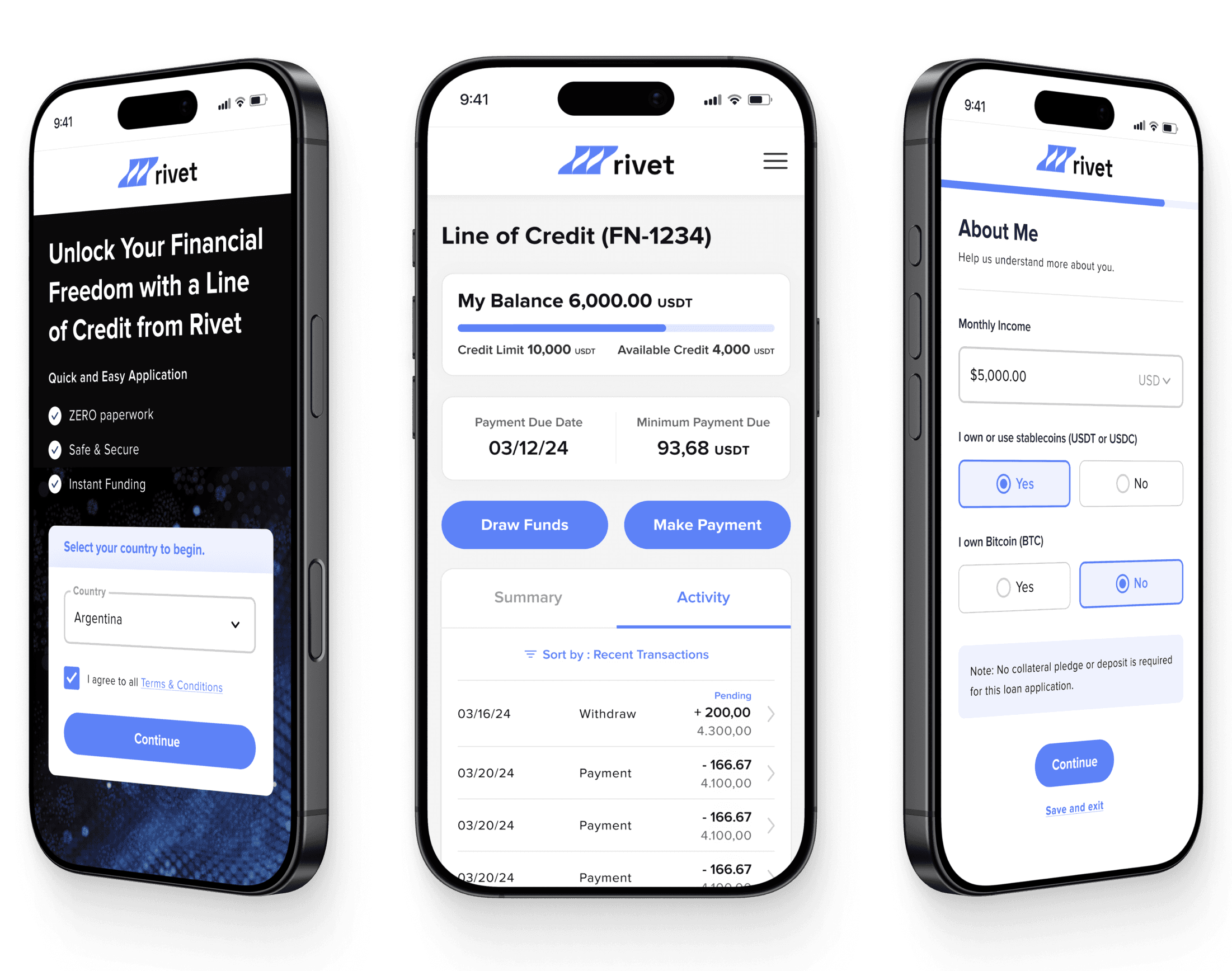
One system, an entirely new product.
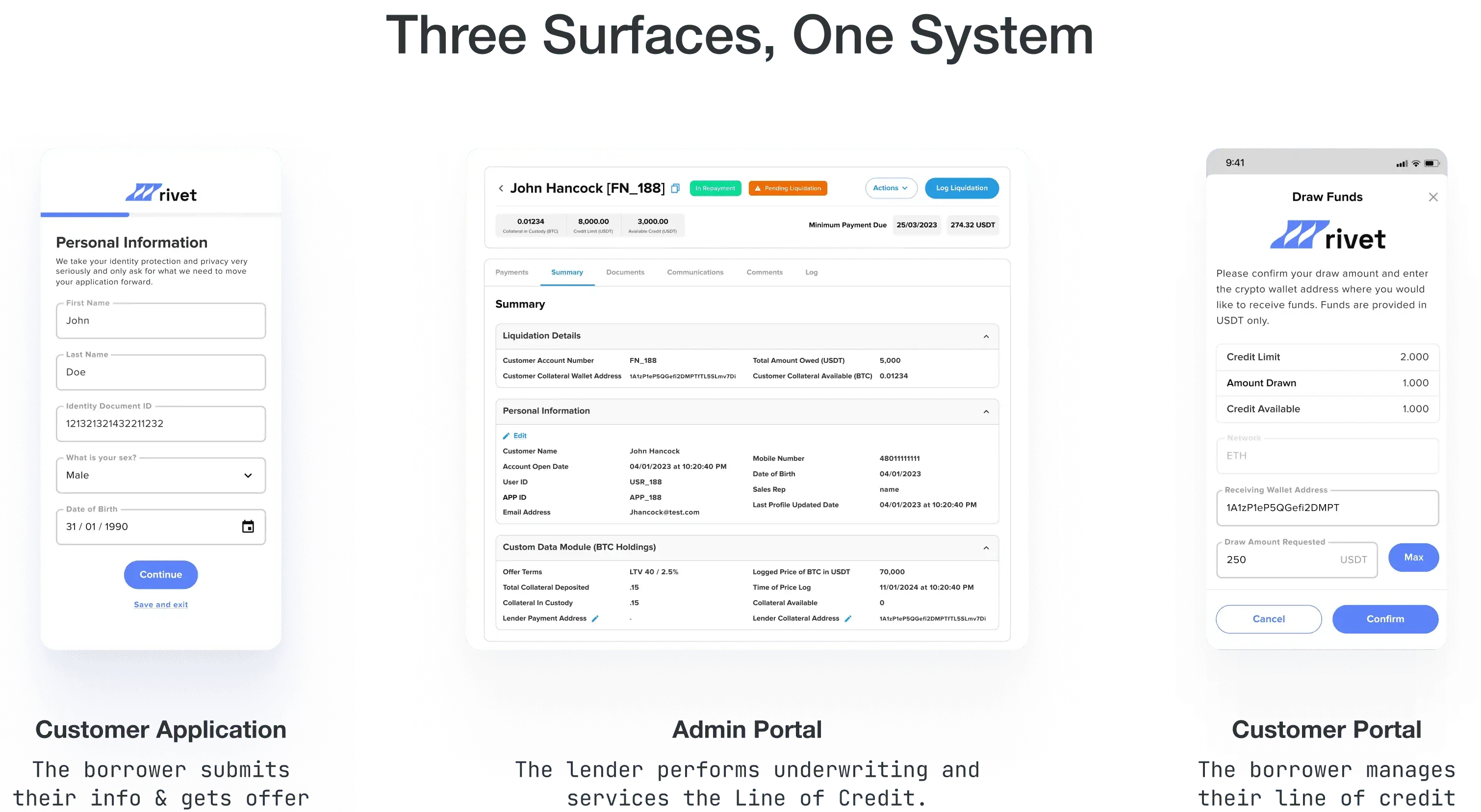


A customer portal built to prioritize mobile.
PayPlan had no mobile portal at all, so I designed one from scratch against the apps borrowers already trust with their money. Every action lives on the account it affects, because a phone has no room for menu structure.


New screens for a new kind of borrower.
Crypto specific screens were designed from scratch, and they had to make an unfamiliar transaction legible to someone doing it for the first time. Every field also had to work in Spanish, with regional formats for phone numbers, addresses, and dates.


The part I got wrong first.
Onboarding ran longer than it needed to. Testing with our Brazilian team showed exactly where borrowers dropped, and simplifying the income and congratulations screens moved completion. That test should have come before the first build instead of after it.
One portal, from offer generation to payoff.
An underwriter builds each offer in the portal, with live Bitcoin prices pulled into the screen so terms are priced against what the collateral is worth right now. After funding, the same portal services the loan: a collateral ledger, a prioritized work queue, and tables that keep recalculating as the price keeps moving.


+
+
Loans Funded
Months from 0-1
Designing for volatility.
Designing a crypto credit product taught me to build clarity and trust in an environment defined by neither. It pushed me toward systems that stay predictable when the underlying asset is not.
The bigger lesson was about sequence. The design system let me move fast, and moving fast meant I built before I tested. The onboarding fix proved the testing was worth doing. It just proved it later than it should have.
